Subtotal 0 CFA



Email : 264
At a Yaoundé press café, FAIRMED reviewed field gains and urged stronger government support.
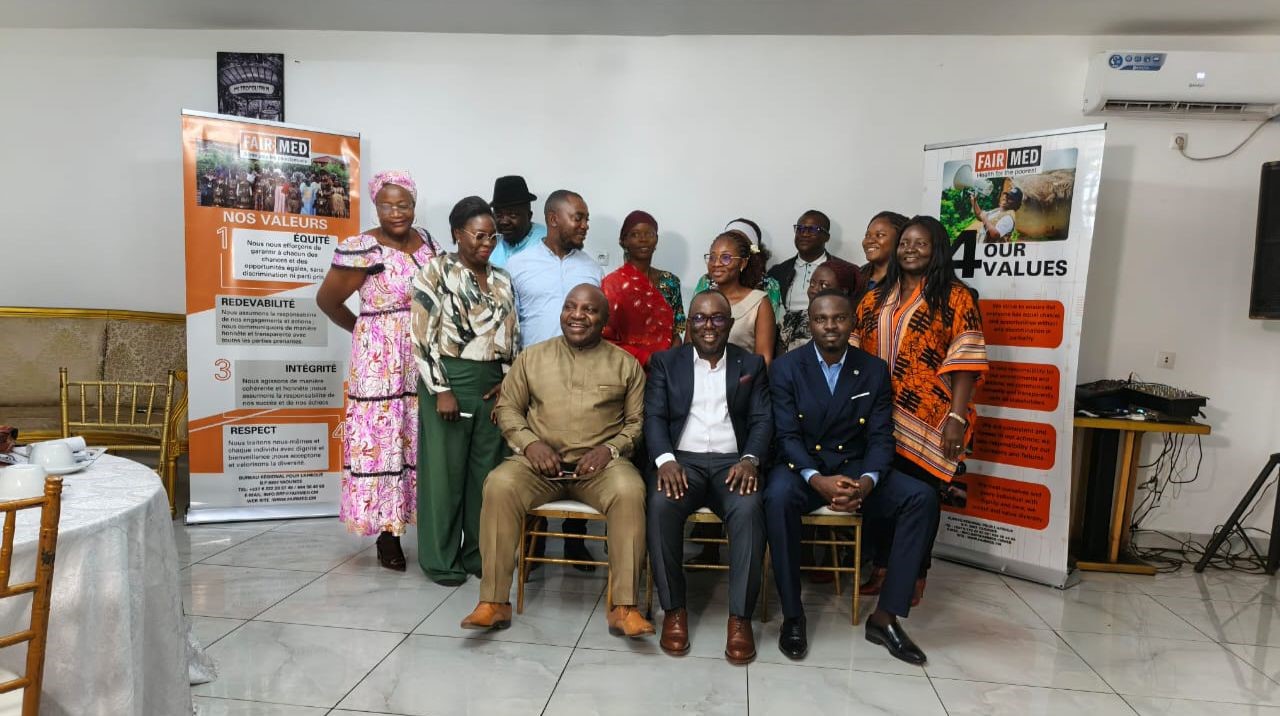
On Friday January 23 2026, the Non Governmental Organisation (NGO) FAIRMED organised a café presse at nouvelle route bastos ahead of the 73rd World Leprosy Day which will be celebrated on January 25 this year under the theme « Leprosy is curable, the real challenge is stigma! ». During the café, the NGO put its field programmes under the microscope, detailing concrete gains in training, consultations and community outreach while flagging persistent operational hurdles that limit the fight against neglected tropical diseases (NTDs) in Cameroon.
Over the course of a two-hour session, FAIRMED panelists; MOU Ferdinand, the coordinator of FAIRMED in Cameroon, Dr. NJIH TABAH Earnest, National Leprosy,Buruli Ulcer, Yaws and Lesihmaniasis Contol program at the Ministry of Public Health, and Dr. FOKOU Franc, Monitoring and Evaluation officer,reviewed a portfolio of on-the-ground activities: classroom and on-site training for peripheral health staff, regular mobile consultations in remote districts, and community screening campaigns that aim to shorten the time between first symptoms and diagnosis. “We prioritise capacity at the periphery: when nurses and community volunteers can recognise early skin signs, treat or refer promptly, lives and livelihoods are saved,” MOU F. explaind.
They presented operational figures to illustrate the impact of that approach. In districts supported by FAIRMED, health partners reported increases in the number of routine skin-NTD consultations and in referrals from community volunteers to primary-care clinics, trends that organisers said translated into earlier case detection and fewer severe disabilities. While global reporting shows hundreds of thousands of new leprosy cases detected annually, sustained action remains essential to stop preventable complications.
Panelists did not shy away from difficulties. Logistical constraints : erratic drug supplies, limited laboratory access in some regions and gaps in routine surveillance, were described as recurring barriers. “Training only works if medicines reach the clinic,” said Dr NJIH. Participants called for more predictable supply chains, strengthened peripheral labs and consistent supervision so that skills acquired in training are reinforced in practice.
Civil-society representative and community leaders emphasised the social dimension of FAIRMED’s field work. Beyond screenings and consultations, the NGO has supported counselling, stigma-reduction campaigns and livelihood linkages for people affected by NTDs; measures that organisers argued are crucial to ensure that treated patients can return to normal life and remain engaged with health services. “Without social support, medical care only solves half the problem,” Explained Dr. NJIH.
Government accompaniment was a recurring theme. FAIRMED representatives underscored close coordination with the Ministry of Public Health and regional health authorities — joint planning, data-sharing and co-led outreach missions — and described these partnerships as central to scaling interventions across the country. Authorities’ involvement, organisers said, helps embed FAIRMED initiatives into national systems rather than running parallel projects. The point echoed calls from global health bodies for stronger partnerships between NGOs and governments to end NTDs.
Looking to 2026, FAIRMED outlined a set of priorities: expand training to more frontline teams, roll out additional community screening rounds, reinforce logistics for uninterrupted multidrug therapy supply, and sharpen monitoring and evaluation so results are measurable and funders can target gaps. The NGO also invited media partners to join upcoming field visits so press coverage can more accurately reflect successes and remaining challenges.
Ornéla ZANGA





















































Comments are closed