Subtotal 0 CFA




Email : 340
As some traditional partners gradually withdraw their support, Africa is redefining the rules of the game in public health. Between sovereignty, domestic financing, and epidemic management, Africa CDC is calling for a paradigm shift.
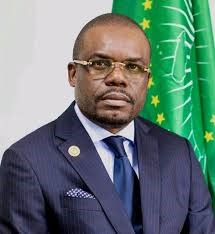
In Addis Ababa, the tone is unambiguous. During the weekly press briefing on March 26, 2026, the Director General of Africa CDC, Dr. Jean Kaseya, laid the foundations for a new doctrine: Africa no longer wants to be a victim, but a decision-maker.
“We will no longer accept partners imposing their conditions,” he insisted, in a context marked by the restructuring of international health funding, particularly after the dismantling of USAID.
The end of a model?
Against this backdrop lies a major transformation: nearly twenty African countries have recently signed new bilateral agreements with the United States, as part of the so-called “America First” strategy. A distinctive feature of these agreements is that funding is now disbursed directly to the countries, an approach that the Africa CDC has been advocating for several years.
But this development is not without its drawbacks. Washington is demanding, in particular, access to health data and pathogens, a condition that the African institution considers problematic.
The Ebola precedent remains fresh in everyone’s minds: vaccines developed from African samples, without equitable returns for the populations concerned.
Sovereignty or dependence?
Faced with these new dynamics, some countries are beginning to resist. Zambia and Zimbabwe have publicly denounced agreements deemed unbalanced, sometimes accompanied by economic concessions in strategic sectors such as mining.
For Africa CDC, the red line is clear: no “economic blackmail.” International cooperation remains essential, but it must align with African priorities, not the other way around.
The bet on local financing
The reduction in external funding acts as a shock. “Africa can rely on its own ingenuity,” insists Dr. Kaseya, calling on states to strengthen their national health budgets.
The example of the Democratic Republic of Congo illustrates this dynamic. Thanks to new mechanisms, such as import taxes and mandatory health insurance, the country is approaching the threshold of 14.5% of the national budget allocated to health, as set by the Abuja Declaration.
Objective: to reduce dependence on donors and improve the efficiency of spending, particularly through digitalization and better management of public finances.
Epidemics: Borders that do not exist
But beyond the funding challenges, the health crisis underscores the urgent need for a coordinated approach. Cholera, mox, measles: the continent is facing a proliferation of crises.
In 2026, Africa recorded nearly 25,885 cases of cholera and 514 deaths, representing 59% of global cases and 99% of deaths related to this disease.
Mpox, on the other hand, shows signs of decline, with a 90% decrease in confirmed cases compared to 2025, proof that integrated strategies can work.
But this progress remains fragile. Population displacements, conflicts, lack of access to clean water and weaknesses in health systems continue to fuel epidemics.
Towards a continental response
For Africa CDC, the lesson is clear: bilateral agreements are not enough. “Epidemics have no borders,” the institution reminds us, advocating for a strengthened regional approach.
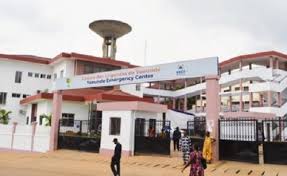
It is within this framework that a new coordination platform has been launched in Central Africa, with Cameroon at the helm. The objective: to pool expertise, strengthen emergency operations centers, and improve crisis preparedness.
Take back control
Behind these announcements, an ambition is emerging: to build a more autonomous African health architecture, capable of responding to crises without systematically depending on the outside world.
A colossal undertaking, which relies as much on political will as on the ability of states to invest sustainably in their health systems.
Because ultimately, as Dr. Kaseya sums up, “no international cooperation will replace the reforms that Africa must carry out itself.”




















































Comments are closed