Subtotal 0 CFA





Email : 1299
Newborns thrown into garbage bins, children killed by their own parents, a mother who takes her own life after murdering her three children: for several years now, the country has been facing a violent surge in infanticide. It’s a phenomenon that is poorly documented statistically, but whose brutal manifestations regularly shock public opinion.
Mathis, Orphée, Divine, Gaëlle, Daphnée… In less than two years, Cameroon has seen a succession of names that have become symbols of collective mourning. And that’s only for the documented and publicized cases. Otherwise, crimes of this nature are now commonplace in the country.
On February 16, 2026, the Nkolbisson neighborhood of Yaoundé was the scene of a tragedy that shocked the entire nation of Cameroon. A mother killed her three children before taking her own life, citing, according to her relatives, unbearable marital distress. In a statement released the following day, the Minister for the Promotion of Women and the Family, Marie Thérèse Abena Ondoa, said she learned with dismay of the murder of three children by their own mother, followed by the latter’s suicide.
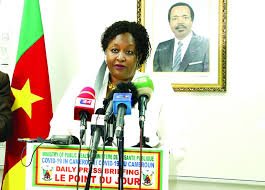
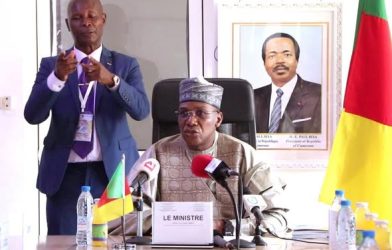
This tragedy will not go unpunished by institutions. Following this incident, the Minister of Social Affairs, Pauline Irène Nguene, broke her silence, condemning the act and calling on the public to consider the measures taken by her ministry. In a statement to the media, she affirmed: “We condemn in the strongest possible terms infanticide or any attempt to harm children, especially when it is staged and disseminated like a tasteless film on social media.”
These official reactions reflect a fundamental reality that figures struggle to capture in its full scope.
A phenomenon that is difficult to quantify, but omnipresent
Infanticide in Cameroon encompasses multiple realities: newborns abandoned or killed at birth, children killed by a parent in a context of psychological or economic distress, and infanticides committed by fathers or mothers in crisis. Cameroonian law distinguishes several forms. According to Article 340 of the Cameroonian Penal Code, a mother who is the principal perpetrator or an accomplice in the murder of her child within the first month of its birth is only liable to imprisonment for five to ten years, without these provisions applying to other perpetrators or accomplices. This provision is considered by some legal experts to be insufficiently dissuasive.
The lack of a centralized national registry on infanticides makes any accurate assessment difficult. These figures appear to be underestimated and remain unreliable due to the lack of reporting surrounding these crimes, emphasizes the Central Bureau of Censuses and Population Studies (Bucrep). This observation applies more broadly to all forms of domestic violence, of which infanticide is the most extreme expression.
What we do know, however, is that these cases regularly appear in the national press. In January 2025, in Yaoundé, a newborn baby was found dead in a garbage bin at the Soa bus station. On May 10, 2025, six-year-old Mathis Ouandji was brutally stabbed to death by Dagobert Nwafo, 47 years old.
On Wednesday, March 18, 2026, the Mfoundi High Court sentenced Dagobert Nwafo to death by firing squad in the so-called “Baby Mathis” case, for the murder of this 6-year-old child. In addition to the criminal penalty, the convicted man must pay 400 million FCFA to the victim’s family, as well as an additional 100 million FCFA in damages.
Deep social roots
Experts agree on several structural factors that fuel this phenomenon. First and foremost, economic pressure. In a context of poverty, young girls are exposed to partners who abandon them after pregnancy, leaving them alone to face daily challenges. These destitute young women, abandoned by their partners, are left without recourse, to the point of adopting fatalistic and cruel behaviors during childbirth.
Teenage pregnancies represent a particularly vulnerable situation. Cameroon has a high rate of teenage pregnancy, estimated at 108 per 1,000 girls aged 15 to 19, according to Africa CDC. This is one of the highest rates in the sub-region. These unwanted pregnancies, hidden from families and without medical care, sometimes result in solitary births and newborns being abandoned or killed.
In addition to these factors, there are untreated mental illnesses. A study published in the Annales Médico-psychologiques and conducted at Jamot Hospital in Yaoundé documents a case of infanticide that occurred during an acute psychotic episode: the 27-year-old mother threw her 18-month-old son into a stream during a fit of anxiety, while she had been experiencing delusions for several months due to inadequately treated psychotic disorders. The study’s authors emphasize the critical lack of psychiatric facilities accessible to the general public.
A context of systemic violence against children
Infanticide is not isolated from a broader context of violence against children and women. According to the Demographic and Health Survey (EDS-MICS 2018), in Cameroon, 13% of women have been victims of sexual violence at some point in their lives, and 5% in the past 12 months. When this violence results in non-consensual pregnancies, it can lead to tragic outcomes for newborns.
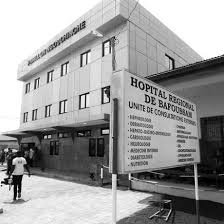
Furthermore, infant abandonment, although little publicized, remains a worrying reality in Cameroon. In August 2025, the Laquintinie Hospital in Douala launched an appeal for witnesses after a 25-year-old mother abandoned her premature baby in the establishment, disappearing without a trace.
A healthcare system under pressure, responses still insufficient
Maternal and child health remains one of Cameroon’s major health challenges. In 2023, Cameroon’s maternal mortality rate was estimated at 258 deaths per 100,000 live births, according to United Nations estimates, while neonatal mortality reached 25 deaths per 1,000 live births, and mortality for children under five years of age, 67 deaths per 1,000 live births.
Newborn mortality contributes to approximately 50% of infant deaths and 26% of child and infant deaths in Cameroon, according to data compiled by health sector partners (UNICEF). In this context, distinguishing between unreported natural deaths, abandonment, and deliberate infanticide remains a major methodological challenge for health authorities.
In response to the scale of the problem, the Cameroonian government launched its National Strategy for Reproductive, Maternal, Child, Adolescent Health and Nutrition (RMNCAH-Nut) in March 2025 for the period 2025-2030, developed with the support of Africa CDC. The country hopes to lay the foundations for a more inclusive and resilient health system, notably through improved access to maternal care and strengthened health data collection.
Justice: Between Displayed Severity and Real Impunity
The judicial response to this phenomenon remains uneven. While some cases result in exemplary convictions, such as that of Dagobert Nwafo in March 2026, others reveal a sluggish criminal justice system. Some perpetrators of crimes against children spend barely two weeks in prison, due to increasingly frequent “bargaining” within the criminal justice system, which obscures the true meaning of the law. Families are not always aware of the procedures, which, even in cases of flagrant offenses, can drag on for a year or even longer.
For Minister Pauline Irène Nguene, “the rise of these social ills constitutes a real danger to the well-being and social balance in our country. The tragedy in Nkolbisson represents, in a way, a warning sign. It raises questions about the impact of the sectoral actions carried out so far and highlights the urgent need for collective reflection on the strategies to combat or prevent these ills.”
A call to action that Cameroonian child protection associations, mental health professionals and lawyers have been relaying for years, without always finding the institutional response commensurate with the urgency.





























































Comments are closed