Subtotal 0 CFA





Email : 719
The World Food Program has offered a cash transfer to some 18,000 internally displaced Persons in the Far North Region of Cameroon, aimed at fighting food insecurity and malnutrition in the Region.
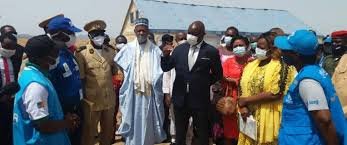
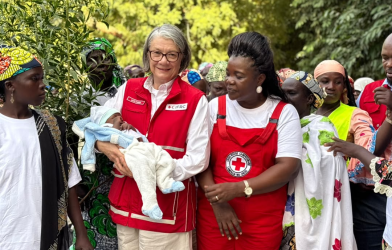
For the year 2021, 18,000 internally displaced persons from the divisions of Mayo-Tsanaga, Mayo-Sava and Logone and Chari (Far North) will benefit from the cash transfers offered by the World Food Program (WFP). They are grouped together in the towns of Mokolo, Koza, Zamai, Mora and Kousseri to receive the cash.
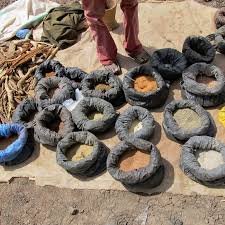
For the implementation of this initiative, beneficiaries with identification documents received mobile phones. Each month, they receive a sum of money, the amount of which depends on the size of the families. Those without phones receive in-kind assistance consisting of food.
“The money deposited in the beneficiary’s account must be used to buy food. They have the option of purchasing food or other items of their choice. To facilitate this monthly operation, WFP brings traders to the distribution sites. This, to allow internally displaced people to get supplies on the spot,” stated one of its coordinators.
This initiative, in support of the efforts of the Cameroonian government, is part of the fight against food insecurity and malnutrition. “WFP uses two assistance modalities: the provision of food and cash. Cash transfer is a means by which resources are made available for the benefit of the beneficiaries.
Usually, they receive a transfer to allow them to support themselves so as not to find themselves in the situation of food insecurity. This is done after targeting the beneficiaries. We have identified the truly vulnerable displaced persons, ”explained Fatimatou Nkouo, a program partner at the PAM office if Maroua.
In 2020, 41,067 Internally Displaced Persons in the towns of Mokolo, Koza, Zamai, Mora and Kousseri received emergency food assistance from WFP, of whom 14,814 received it through cash transfers. The amount of this transaction amounts to more than one billionCFA francs, made available by donors such as the European Union and FCDO.
This assistance to Internally Displaced Persons in the Far North Region of Cameroon comes at a comment when thousands of displaced Cameroonians from the Northwest and Southwest Regions continue to suffer from malnutrition in their areas of refuge, particularly those in Nigeria.
According to statistics from WFP, Cameroon still faces serious challenges in achieving Zero Hunger and eradicating malnutrition by 2030 as required by Sustainable Development Goal 2. The country ranks 150 out of 189 in the 2019 Human Development Index and 39 percent of its people live under the poverty line.
Poverty has a strong regional dimension. It is mostly concentrated in rural areas and specifically in the northernmost and eastern regions, where structural underdevelopment and recurring climatic hazards have limited opportunities for communities to thrive and break out of the poverty trap.
The Far North, North, Adamaoua and Eastern regions are frequently exposed to food crises and climate shocks, including floods and droughts. These, combined with poor road infrastructure, land degradation, outdated agricultural practices, high post-harvest losses and fragmented markets, severely limit people’s access to sufficient nutritious food.
With a population of 23.7 million people, Cameroon is strategically positioned at the crossroads of West and Central Africa. Over the past decades, the country has enjoyed economic growth as well as relative peace and stability in a sub-region troubled by conflict and crisis.
Despite this, nearly 40 percent of Cameroon’s populations still live below the poverty line and human development indicators remain low. Classified as lower-middle-income, the country ranks 153 out of 188 according to the 2015 Human Development Index. The 2015 Global Hunger Index (GHI) ranks Cameroon 68 out of 104 with a score of 24.2, placing it in the “serious” severity level of hunger.
The agricultural sector has the greatest potential in driving economic growth and reducing poverty and hunger. However, due to outdated agricultural practices, high post-harvest losses, fragmented markets and recurrent climate shocks especially in the Northern regions, the country continues to struggle with food security challenges.
Ingrid KENGNE























































Comments are closed